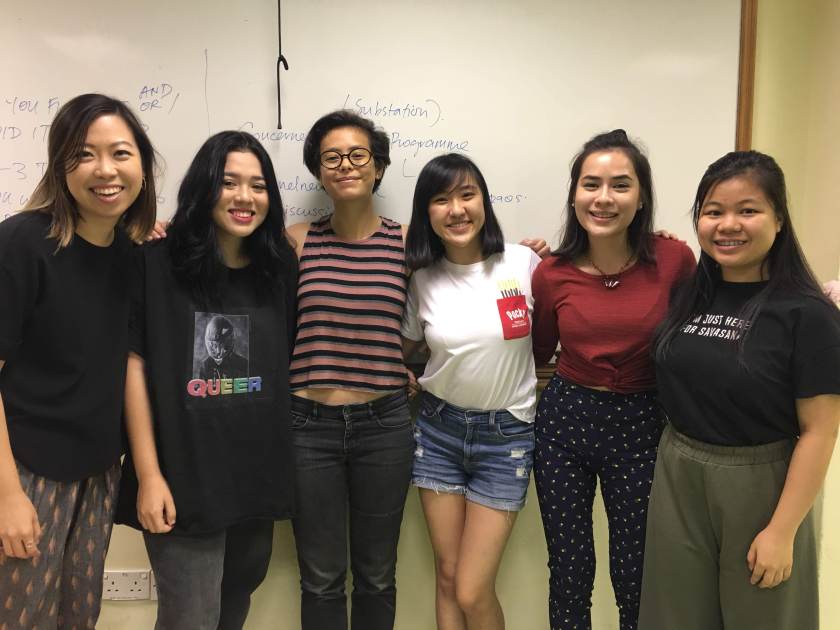
During the first seminar of this module, the six of us (seven, including Corrie) sat in a quiet, awkward circle, and shared a little bit about ourselves. We each introduced our own history and background in theatre, the last show we had watched, and our individual encounters with theatre criticism. A sneaky way of asking, “So why did you take up this module?” without being met with blank minds and faces. We each wrote our personal goals for the module, signed our names and surrendered them to Corrie, then moved on to something more hands-on: filling the white board with post-it notes, each one representing a quality we thought a good piece of performance criticism should have. By the end of the class, with the questions, sharing and discussions still floating in our heads, we started to form an understanding of what we thought criticism should be, what our classmates thought criticism should be, and how we might start to form our own responses to performance.
Fast-forward to 14 weeks later, having conquered theoretical and academic readings ranging from inspiring to incomprehensible; three shows and three very different writing assignments; two meetings with established writers and artists; and one arduous research paper, we sat down again to review the semester. Corrie handed us back our long-forgotten sheets of paper, and we got to reflect on our goals, deciding if we had fulfilled them or not and if our goals remained the same throughout, or if along the way we had decided to go in a different direction. From that discussion, from the pride we felt in each piece of writing produced this semester and the things we learned to be excited by, we put together this blog: to condense and consolidate our work over the last 14 weeks.
We recognise the importance of criticism to further the post-show discussion and keep the conversation going, and hope that our work may contribute to the ecology of conversations around theatre and performance. What you will read, interact with, are our thoughts, conversations with the shows, each other, Corrie, and with ourselves. We hope you will stay with us, for a moment.
– Ariane, Ella, Mel, Rose, Sabrina and Xin Ying
Chia Xin Ying is a Theatre Studies undergraduate in her last semester of studies. She enjoys participating in and discussing performance. Through theatre criticism, she hopes to explore more ways of expressing herself and contribute to conversations on performance.
Sabrina Faisal is a passionate writer, whose distinctive and breezy voice strikes you with the kind of confiding informality that invites you to stay for tea and a chat. She’s currently doing her Honours year as a Communications and New Media student in NUS with a Minor in Theatre. In her free time, she enjoys drawing, reading queer fiction, and reciting the entire Hamilton soundtrack from memory.
Rose Marie Henry is currently a third year student in National University of Singapore (NUS) where she studies Theatre Studies as her academic major. As a theatre studies major, she is constantly interested in learning more about performance theory, criticism and the discourse around it.
Ariane Vanco is currently a year 3 undergraduate English Literature and Theatre Studies student in NUS. Not one for theory, she is often lost in literature seminars and would love to delve more into postcritique and feminist/queer theory. She is more alive outside of school when making coffee and chatting with customers.
Ella Wee is currently an NUS undergraduate student studying English Literature and Theatre Studies (and hopes to remain a student forever because what is “real” life). She is an aspiring writer and dabbles in aerial arts. Some people say she has no spine and should, idk, be in a horror film.
 Exploring Theatre Criticism